Skip to content
Your thinking patterns
Explore all-or-nothing thinking, perfectionism, reward loops, and the thoughts that make giving up feel reasonable in the moment.
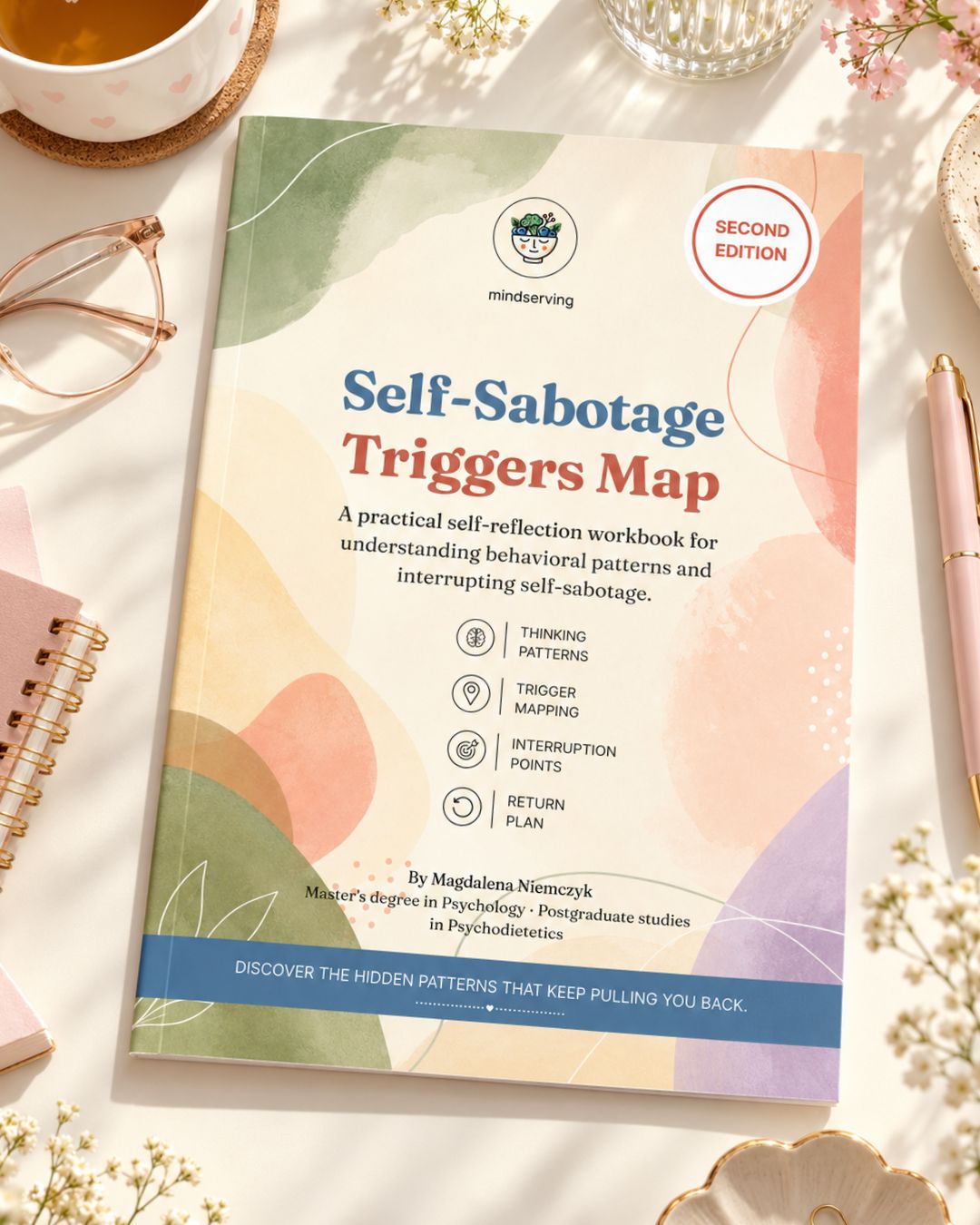
A practical workbook for understanding the thoughts, emotions, and circumstances behind repeating patterns. Map your triggers and explore realistic interruption points without turning a setback into a judgment about yourself.
$9.99Digital PDF · Printable exercises · Read at your own pace
Also available in The Calmer Eating Collection with two complementary ebooks.
You begin with a plan, follow it for a while, and find yourself doing the familiar thing again. Maybe one unexpected moment becomes “I’ve ruined everything.” Maybe your routine disappears when life gets stressful.
This workbook gives you a way to examine that sequence. What happened? What did you tell yourself? What did the response offer in the moment? Seeing those details can help you choose a more realistic point to work with.
You want to understand what happens between intention and follow-through.
You recognize all-or-nothing thinking and want a more flexible response.
You want to account for your needs and capacity, instead of planning for an ideal week.
You’re looking for prompts, checklists, and a personal map rather than another motivational message.
Move from noticing your thoughts and triggers to mapping the behavior gap and building a personal reference profile.
Explore all-or-nothing thinking, perfectionism, reward loops, and the thoughts that make giving up feel reasonable in the moment.
Identify situations, emotions, body states, and thoughts that tend to set your pattern in motion.
Map what you intended to do, what happened instead, and what changed between those two moments.
Find a realistic place to pause, prepare, ask for help, or respond differently without relying on willpower alone.
Explore the beliefs and needs beneath the surface thought, including what the familiar response may be doing for you.
Bring your observations together in a reference map you can revisit when the pattern appears again.
A familiar response may offer relief, protection, or a way out of pressure in the short term. This workbook asks you to explore that possibility without treating it as a diagnosis or an excuse. The goal is to understand the pattern and its cost, then consider a response that respects your needs and longer-term intentions.
Start with the context, not only the food. The trigger audit helps you notice situational cues, emotional states, thoughts, and physical capacity — including hunger, fatigue, and the structure of your day.
Mapping one example can help you see connections that are easy to miss when you only focus on what you did afterward. You do not need to review every meal or monitor yourself all day.
Choose a recent moment, trace the sequence, and identify where a pause, preparation, support, or a different response might be realistic. The workbook’s interruption tool also asks what could make that step easier and what your backup could be.
These are actual pages from the workbook: ways to use it, a map of its sections, and an all-or-nothing thinking worksheet. Open any sample to enlarge it.
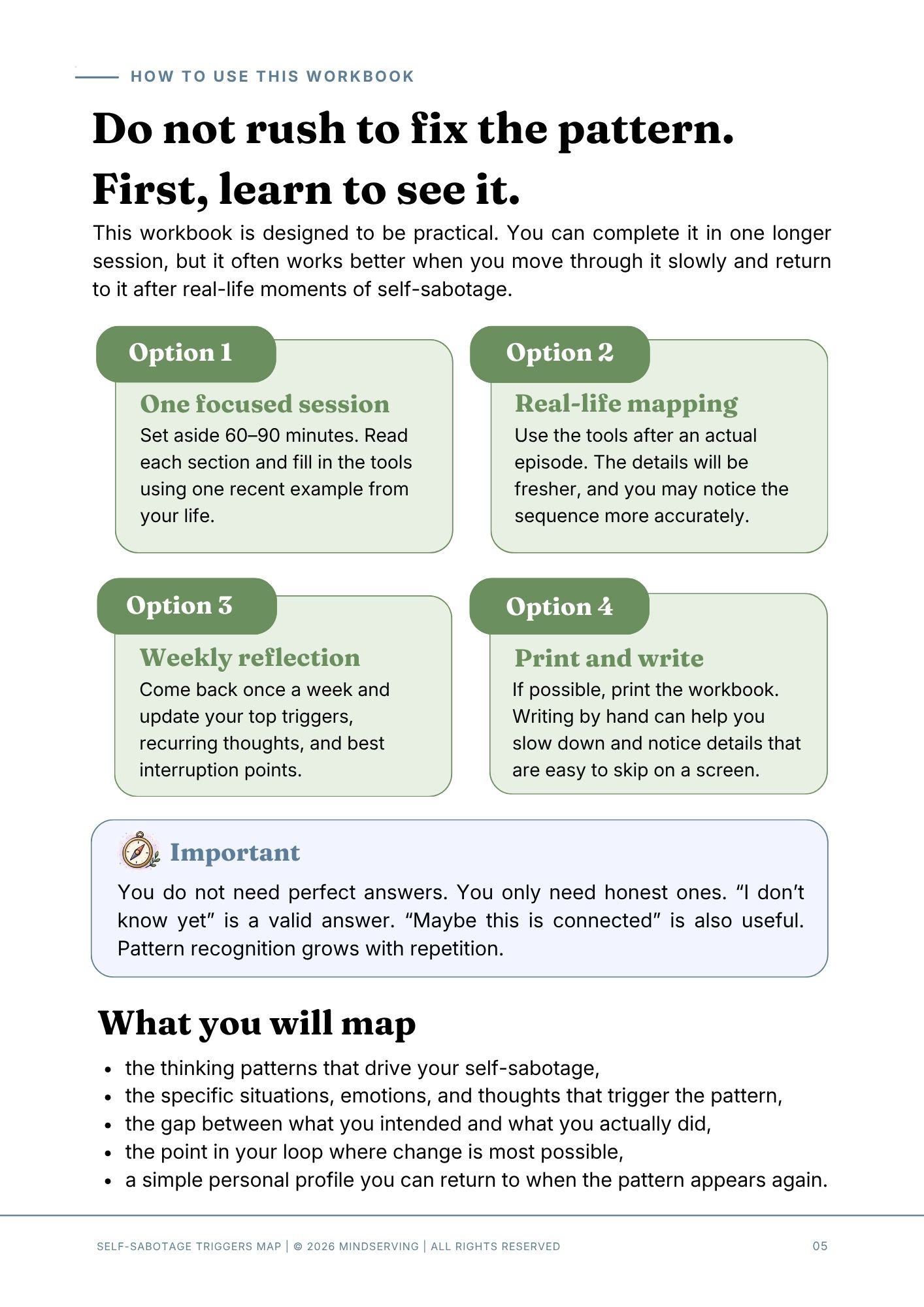 Page 5 · How to use this workbook
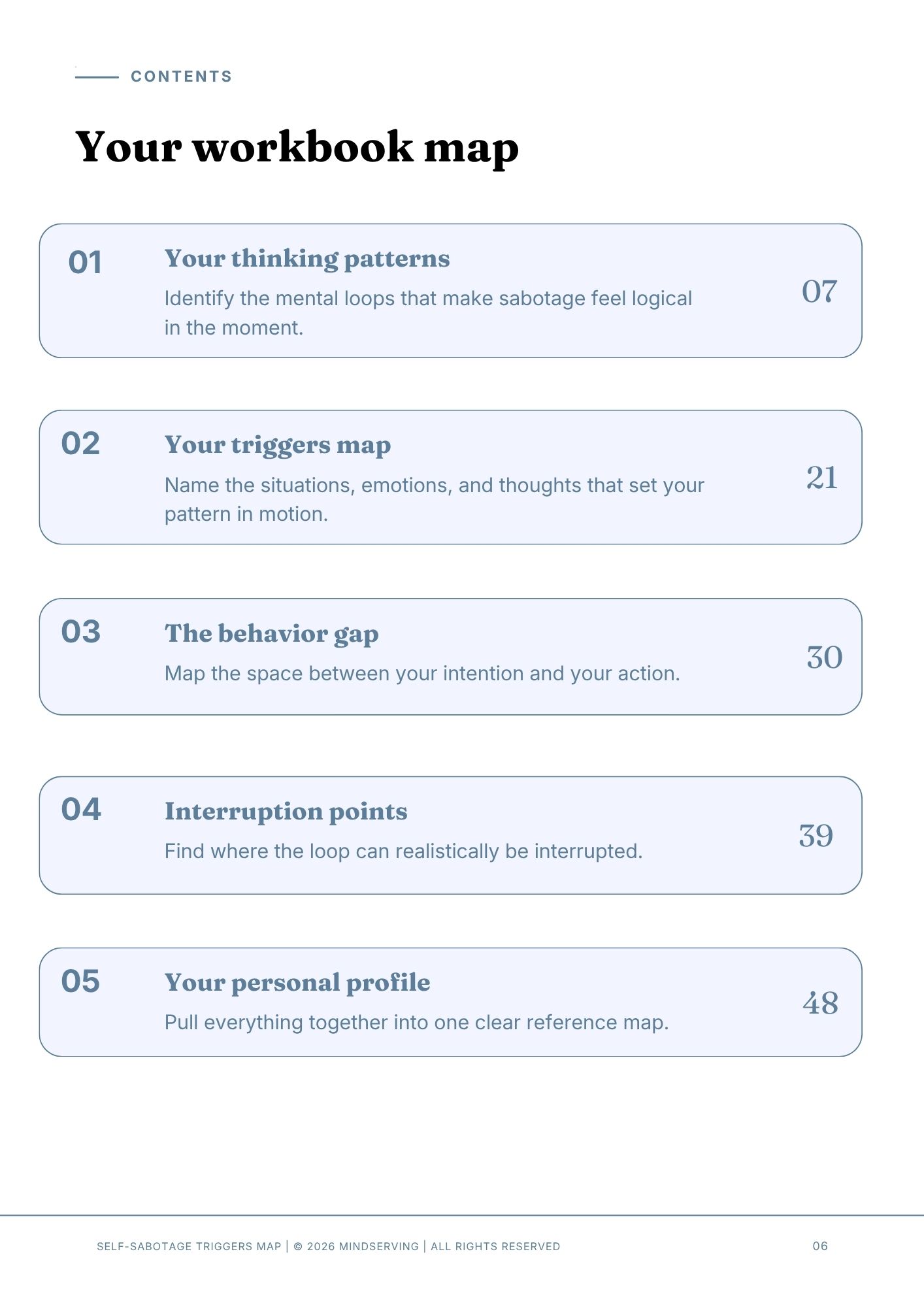 Page 6 · Your workbook map
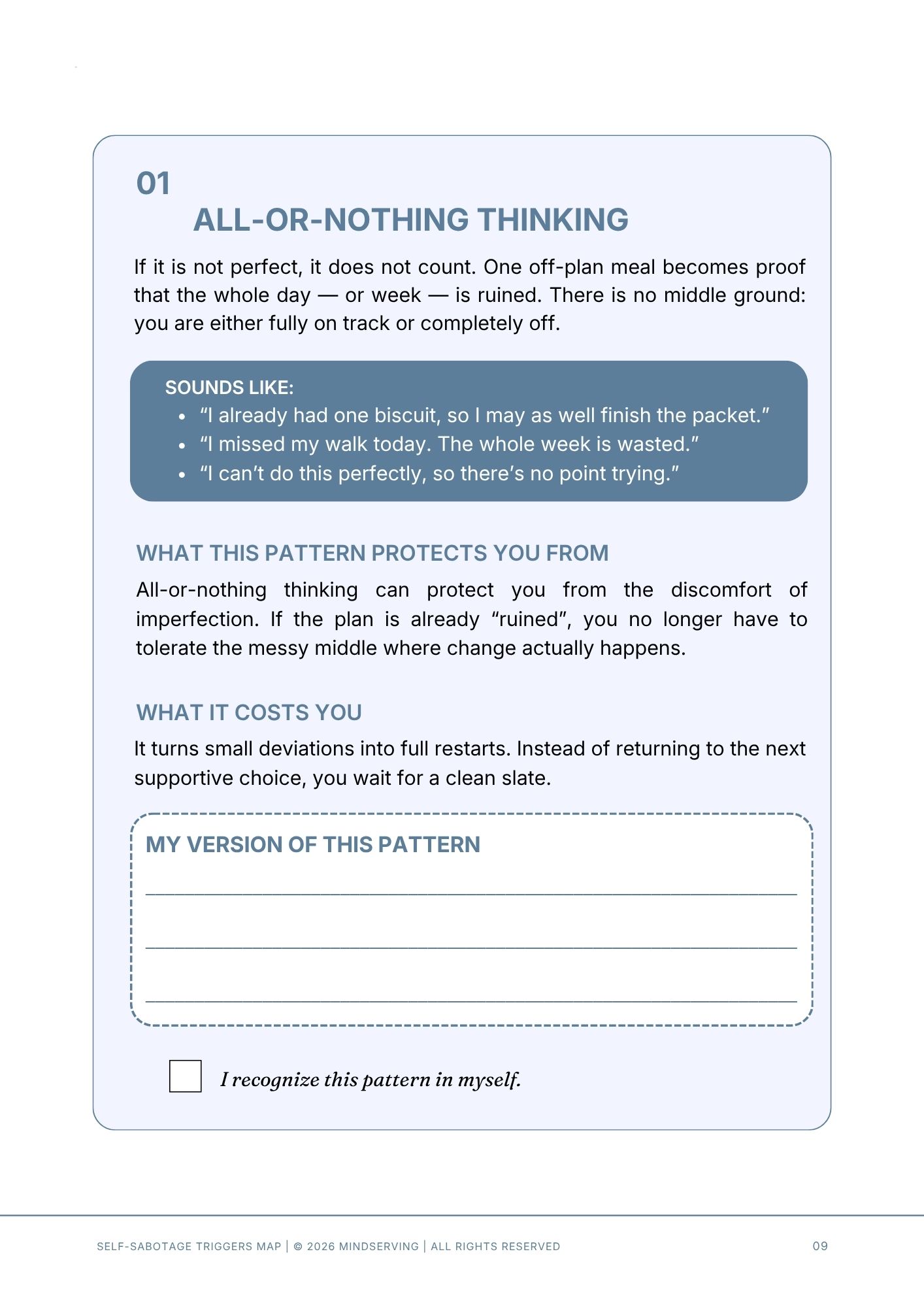 Page 9 · All-or-nothing thinking
A few clarifications about the workbook, how to use it, and its limits.
Many examples focus on eating and health habits. The workbook helps you explore emotional eating triggers and repeating patterns, but it can also be used for procrastination, avoidance, routines, and self-care.
This workbook invites you to examine the particular moment instead of assuming you lack discipline. Its tools explore pressure, rigid thinking, stress, needs, and the short-term function of a familiar response. It does not assume every setback has one underlying cause.
The trigger audit and mapping pages guide you through situations, emotions, thoughts, and physical capacity. You can begin with one example and look at what happened before, during, and afterward.
No. Read the explanations, choose one relevant exercise, and return when you have something useful to explore. You can print selected pages and write by hand. There is no score or required pace.
It does not provide a diet, meal plan, calorie target, or weight-loss promise. Its focus is pattern recognition and a more thoughtful response to recurring difficulties.
No. It is educational and reflective material, not a treatment program. If eating feels unsafe, involves significant loss of control or compensatory behaviors, seek support from a qualified professional.
A 55-page digital PDF workbook with explanations, checklists, reflection exercises, mapping tools, and a personal profile. It is not a physical book; selected pages can be printed for personal use.
Use the exercises that feel relevant, gather your observations, and create a personal reference you can return to when an old pattern starts to appear.
55 pages · Digital PDF
Guided exercises and mapping tools
Payhip checkout · Digital product