Skip to content
Name the experience
Explore cravings, overeating, and loss of control without assuming they are all the same experience.
Explore cravings, emotional eating, binge-like episodes, and the moments when eating feels difficult to interrupt. Find language for your experience and build a personal response plan without adding more shame.
$17.99Digital PDF · Printable reflection pages · Read at your own pace
Also available in The Calmer Eating Collection with two complementary ebooks.
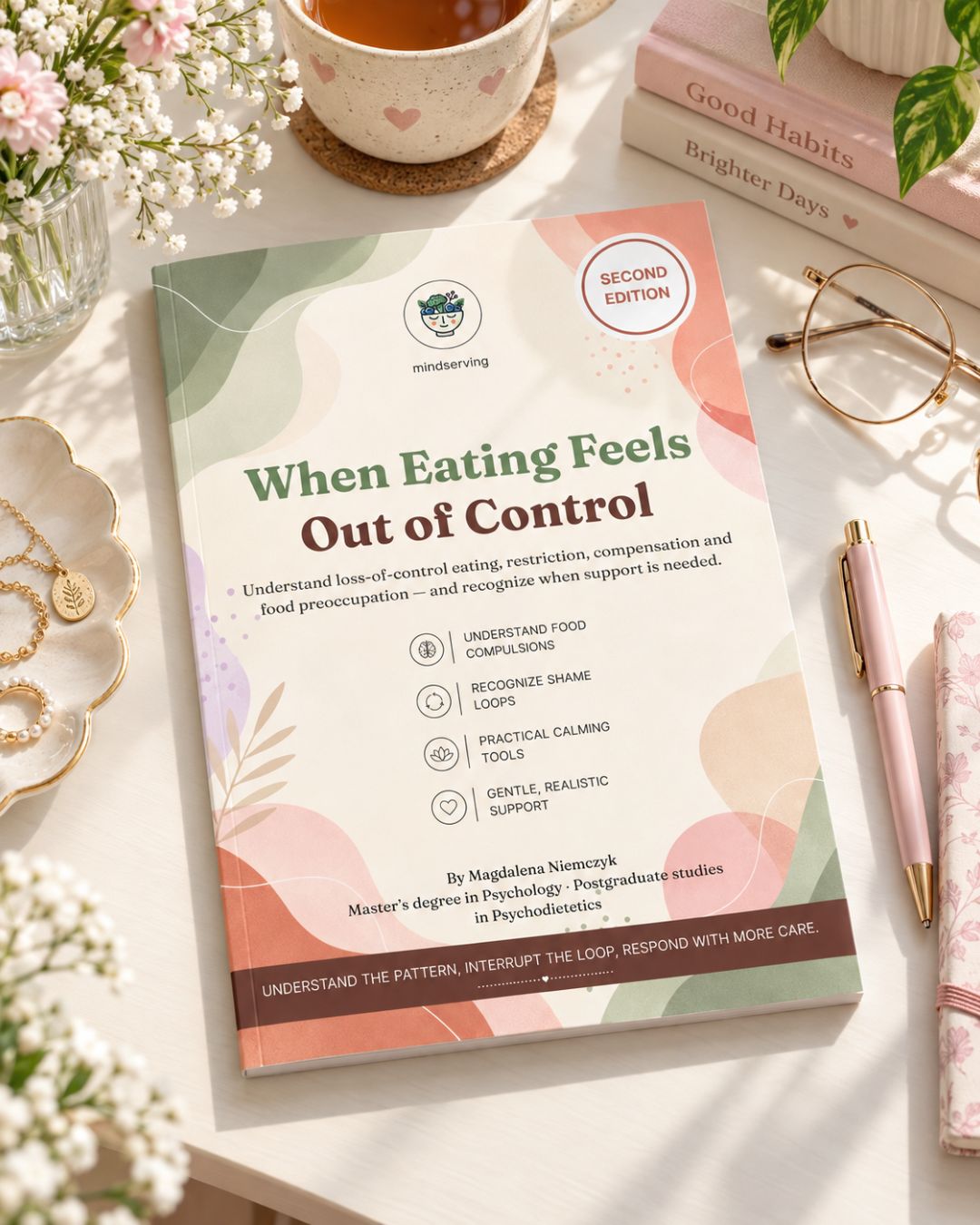
You planned to have a little, but eating gathered momentum. Or you spent the day trying to follow every rule, only to feel overwhelmed around food in the evening.
This workbook helps you explore what happened before, during, and after those moments. It makes space for hunger, emotions, context, and learned patterns, so reflection can become useful information instead of another reason to blame yourself.
You want to notice the cues and circumstances that come before it.
You want to understand what builds up throughout the day.
You want a way to reflect without punishment or a promise to be stricter tomorrow.
You want to describe the pattern more clearly, for yourself or a professional.
Clear explanations and practical prompts help you map the pattern and consider a response that fits your circumstances.
Explore cravings, overeating, and loss of control without assuming they are all the same experience.
Look at cues, reward, stress, food rules, and the patterns that make an urge feel urgent.
Explore delayed nourishment, fatigue, emotional overload, and why eating can feel different at night.
Reflect on guilt after eating, secrecy, self-criticism, and the urge to compensate or start over.
Use reflection prompts to explore hunger, relief, stimulation, habit, and how they can overlap.
Bring together practical tools for before, during, and after a difficult eating episode.
This workbook invites curiosity about the experience, rather than a verdict about your willpower. You can read slowly, skip a prompt, and return when you feel ready. The aim is to understand what you need and identify useful next steps, including professional support when appropriate.
If that question brought you here, this workbook offers a place to explore the pattern behind it. The evening section looks at the whole day: missed nourishment, stress, fatigue, and the first chance to rest or have something for yourself.
It includes reflection tools for noticing what preceded the urge and what support may be missing. It does not promise to stop episodes or ask you to treat hunger as something you must overcome.
Notice early cues. Explore what might help in a difficult moment. Reflect afterward without turning the episode into a reason to punish yourself. Your response plan brings these observations together in one place.
These are actual pages from the ebook: a guide to choosing where to begin, an explanation of restriction, and a restriction check-in worksheet. Open a sample to enlarge it.
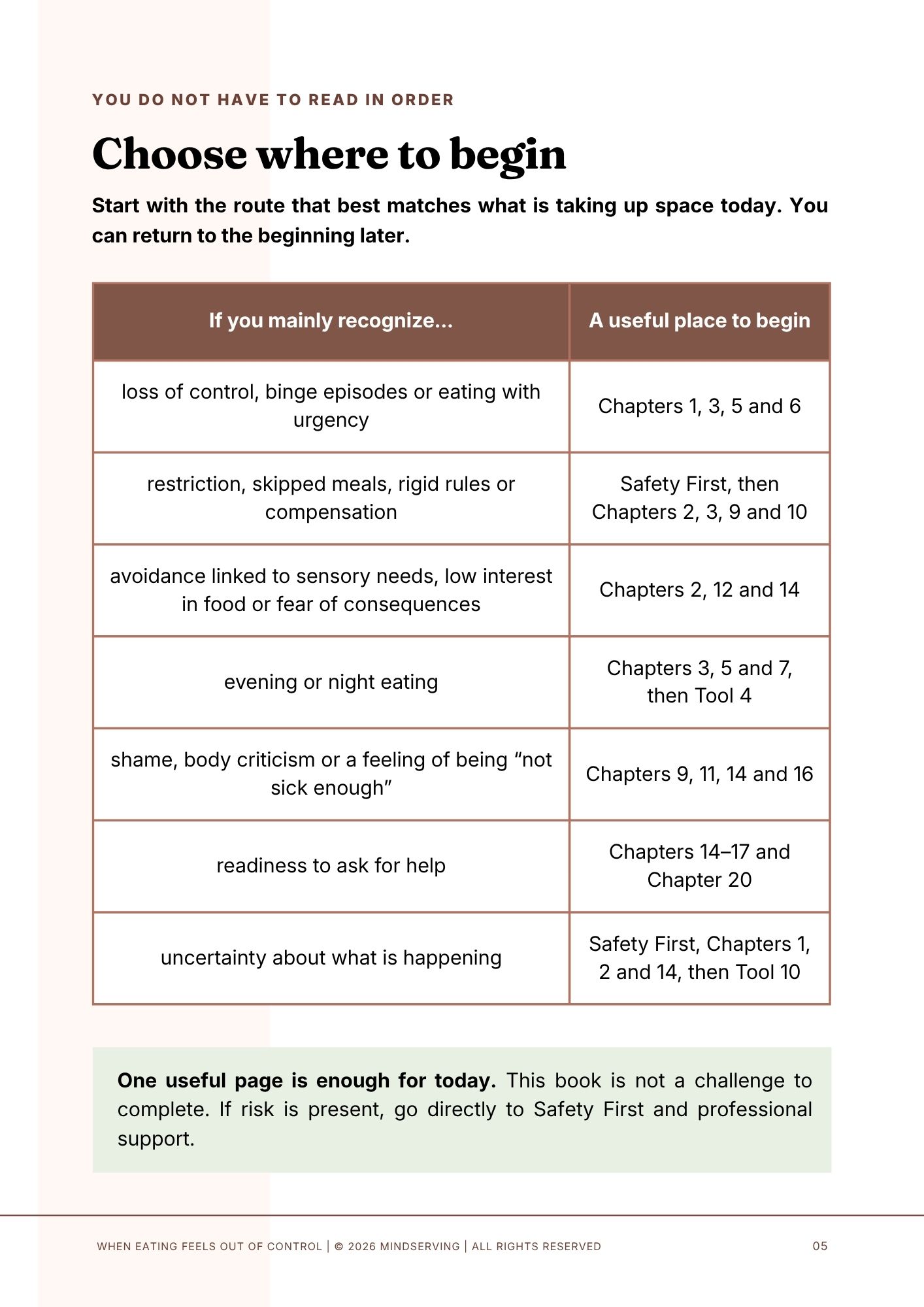 Page 5 · Choose where to begin
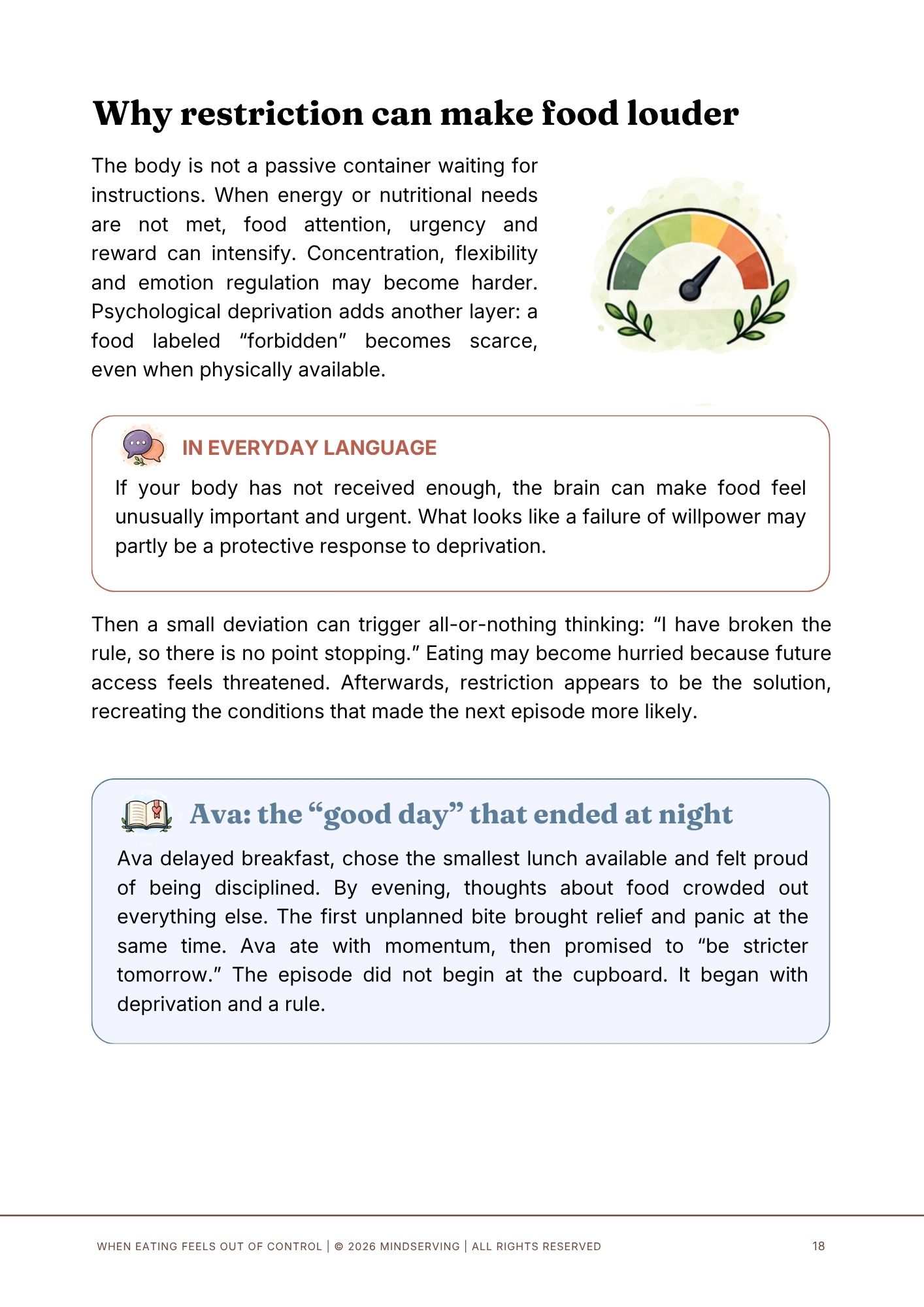 Page 18 · Why restriction can make food louder
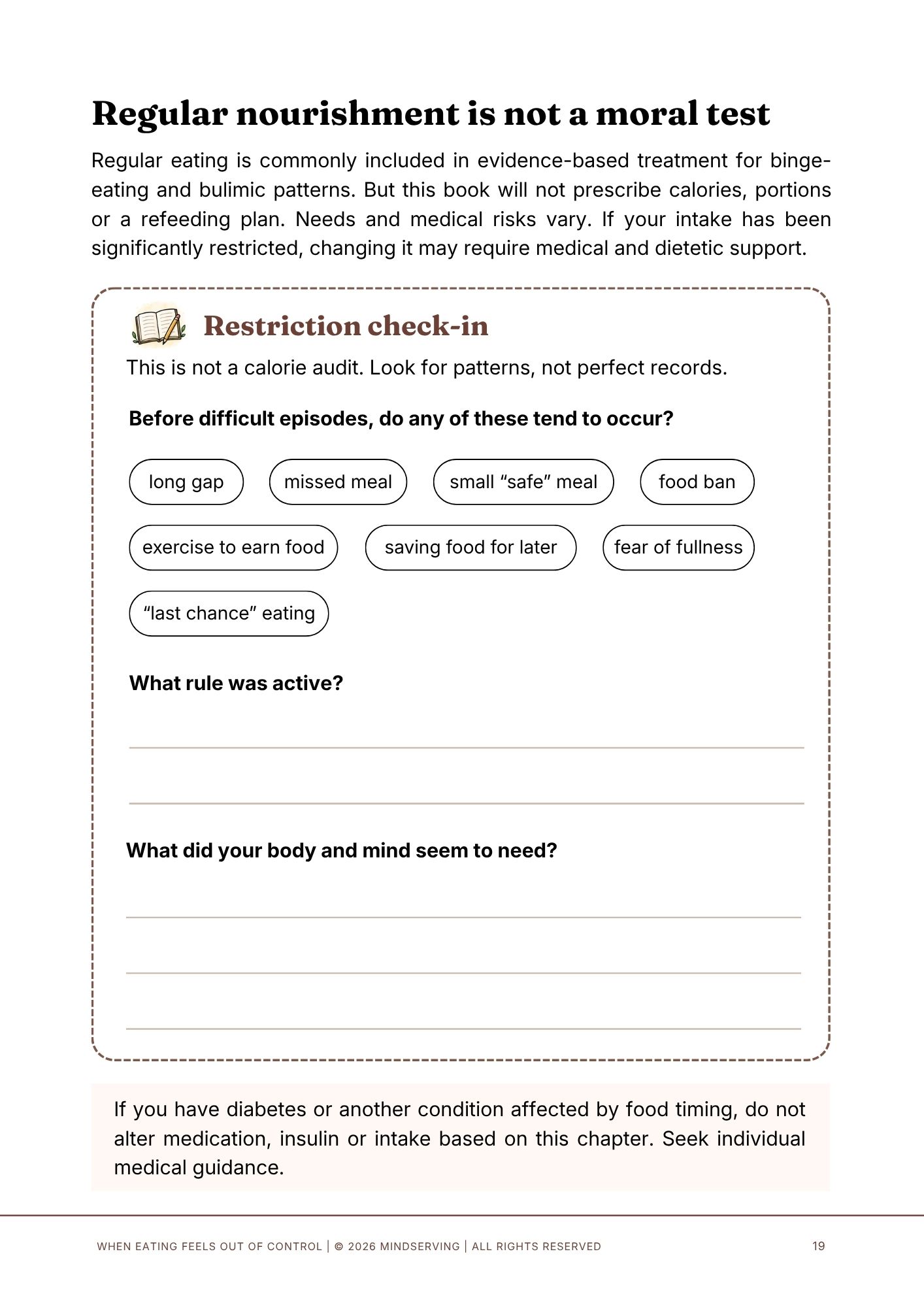 Page 19 · Restriction check-in
A few clarifications about the workbook, its focus, and its limits.
It is an educational and reflective workbook for binge-like and loss-of-control eating. It can help you describe your experiences, but it does not diagnose binge eating disorder or replace treatment.
Yes. The workbook explores evening and nighttime patterns, including delayed nourishment, stress, fatigue, and private moments of relief. The sample on page 41 gives you a glimpse of this section.
The workbook explores how restriction, rigid rules, loss-of-control eating, guilt, and renewed restriction can become a repeating pattern. Reflection pages help you examine your own experience without treating it as a personal failure.
No. Its focus is understanding eating patterns and creating a personal response plan. It does not prescribe a meal plan, calorie target, or weight-loss program.
No. This is self-guided educational material. If eating causes significant distress, or involves purging, severe restriction, or other compensatory behaviors, seek support from a qualified professional. You can bring relevant reflections to an appointment.
A 126-page digital PDF workbook with explanations, exercises, reflection tools, and response-planning pages. It is not a physical book. Selected pages can be printed for personal use.
Explore the parts that feel relevant, use the prompts that help, and bring your observations into everyday life or a conversation with a qualified professional.
126 pages · Digital PDF
Practical guide and reflection workbook
Payhip checkout · Digital product